
Elephant
CHAIN
STEEL.
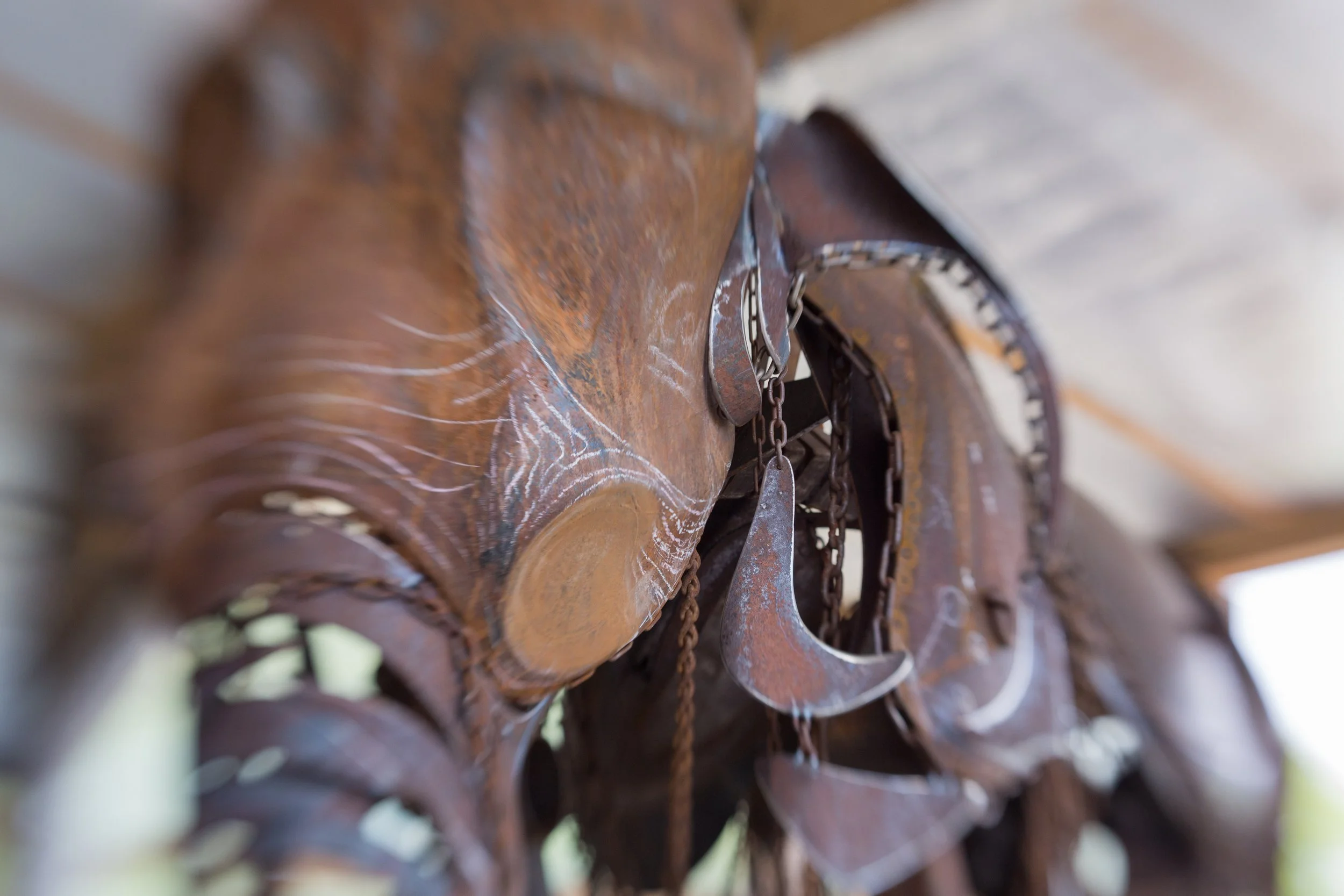
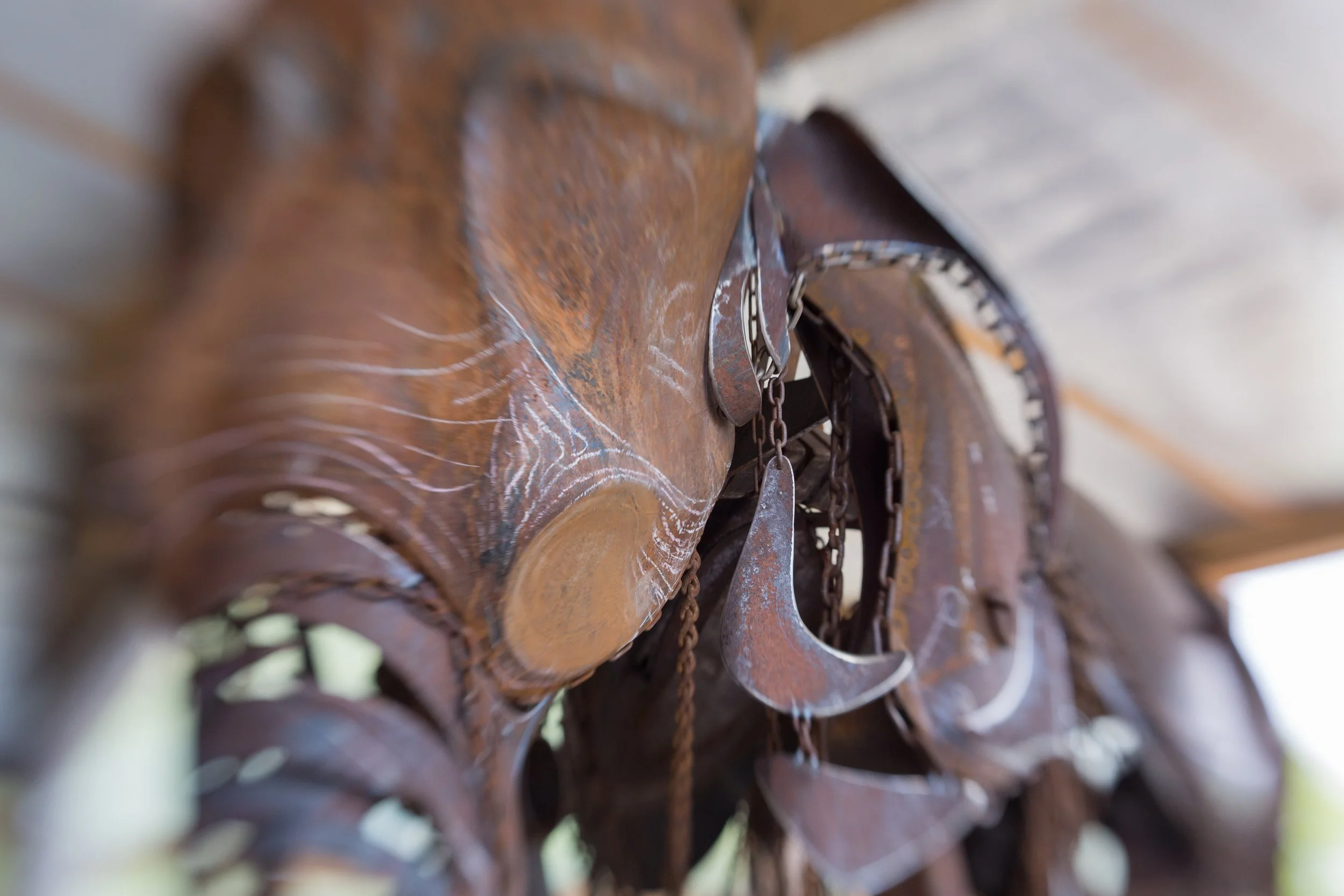
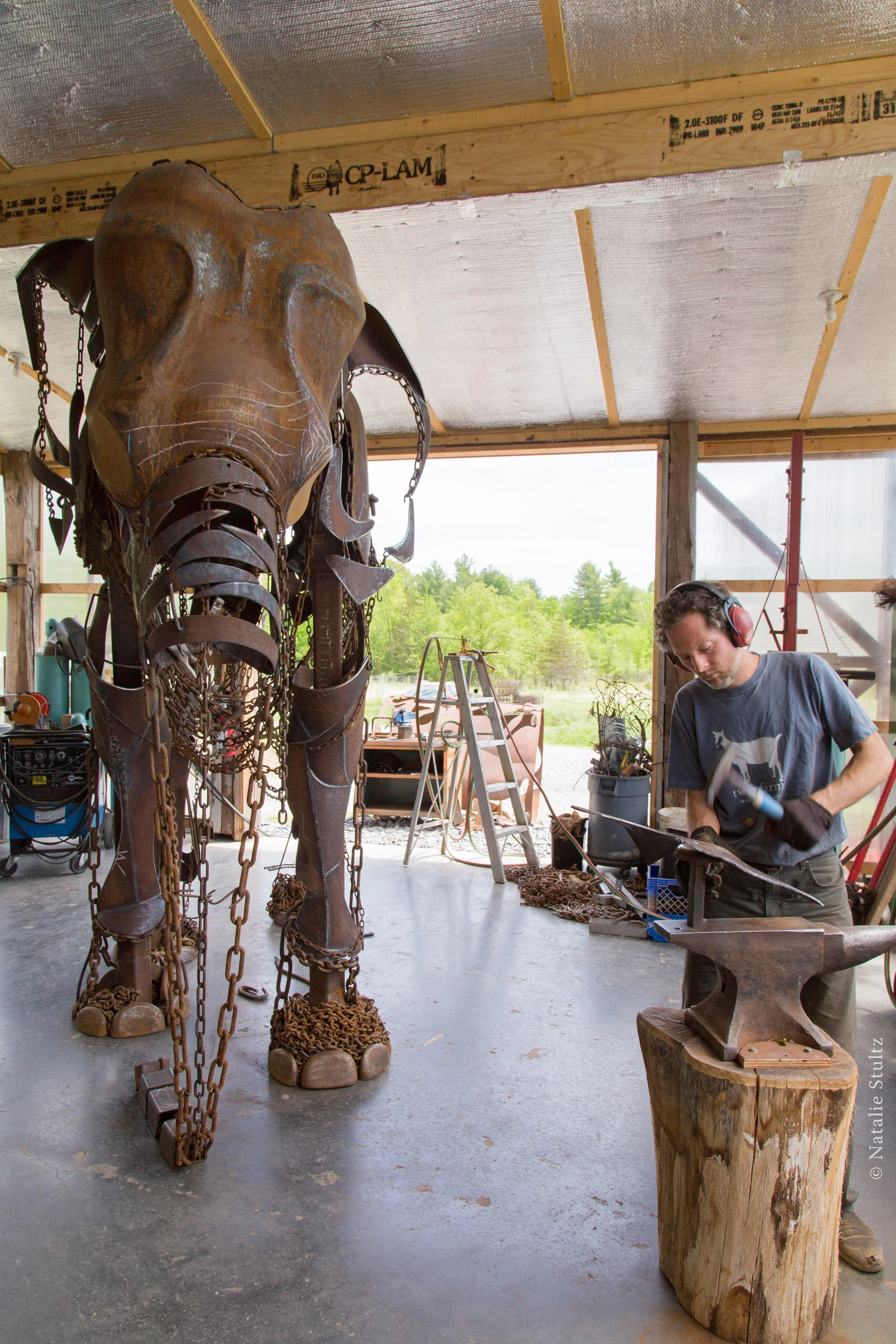
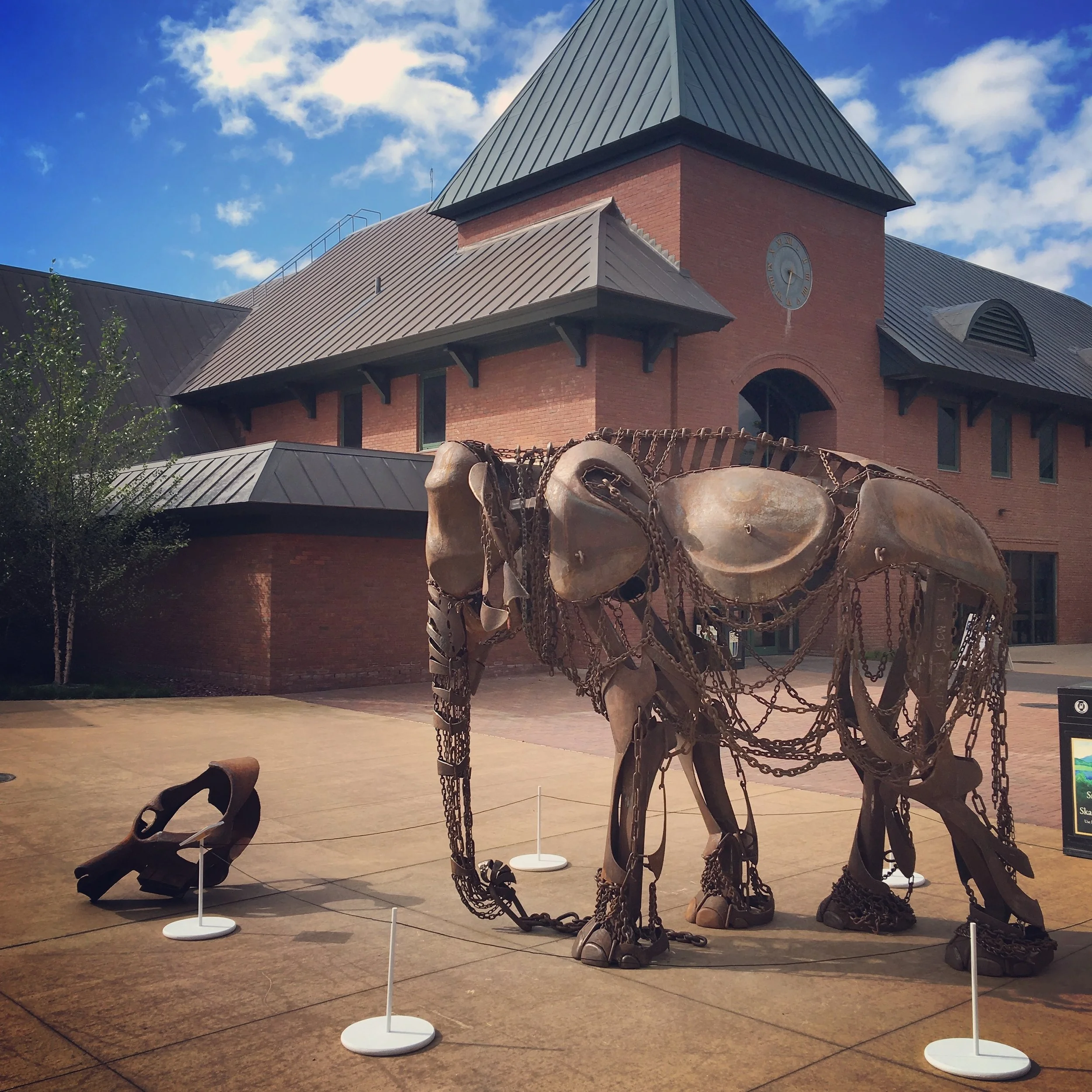
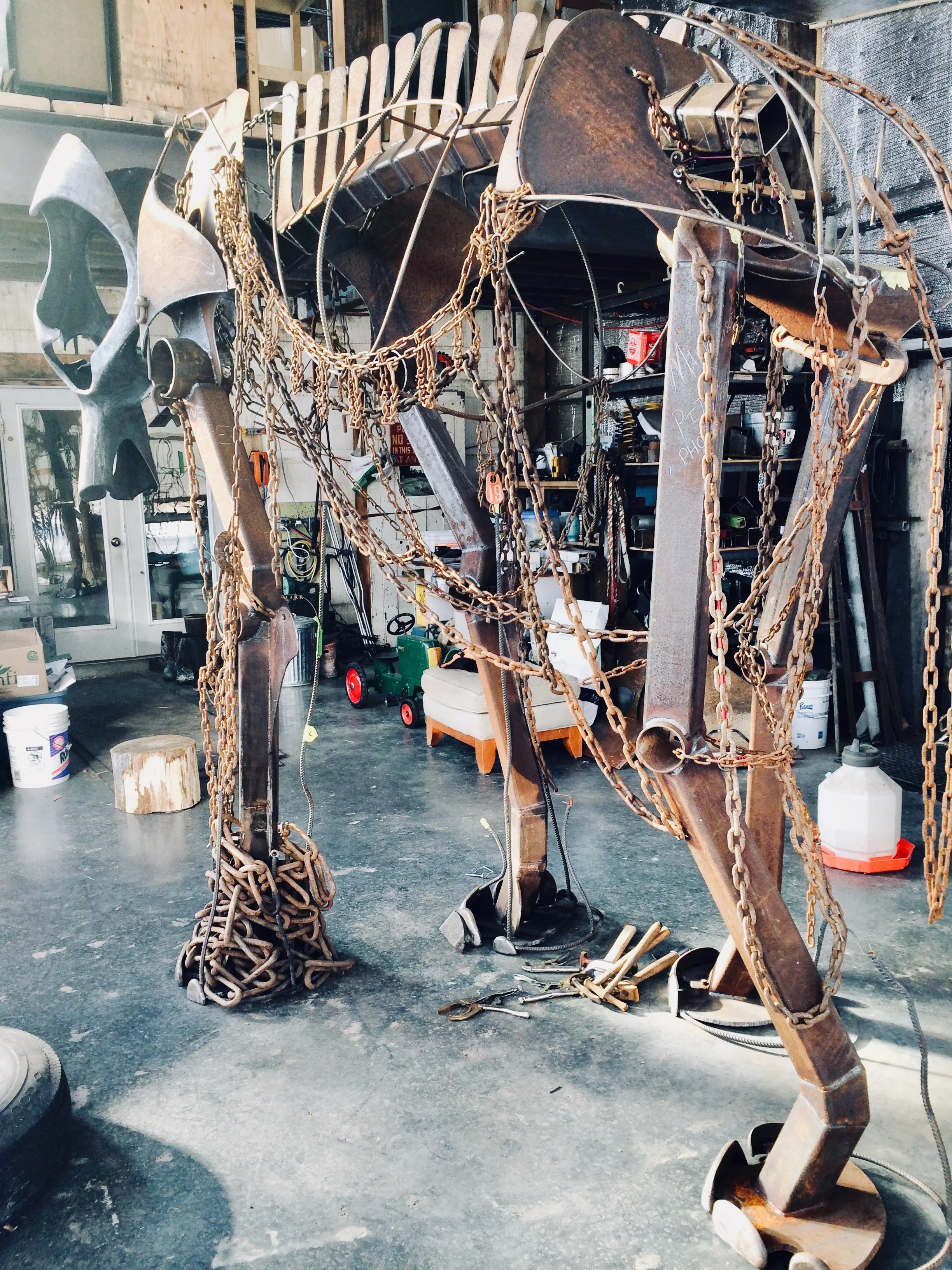
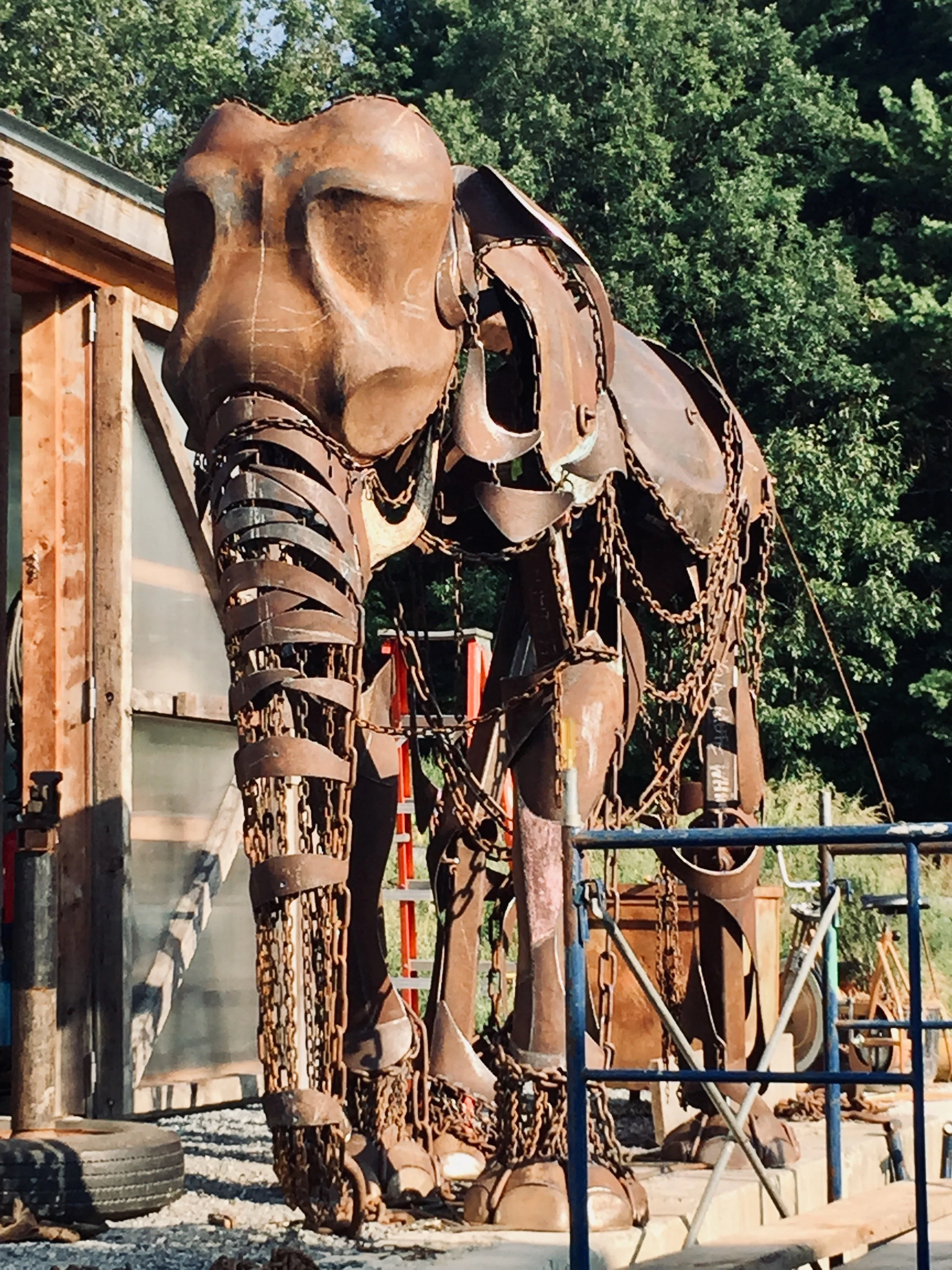
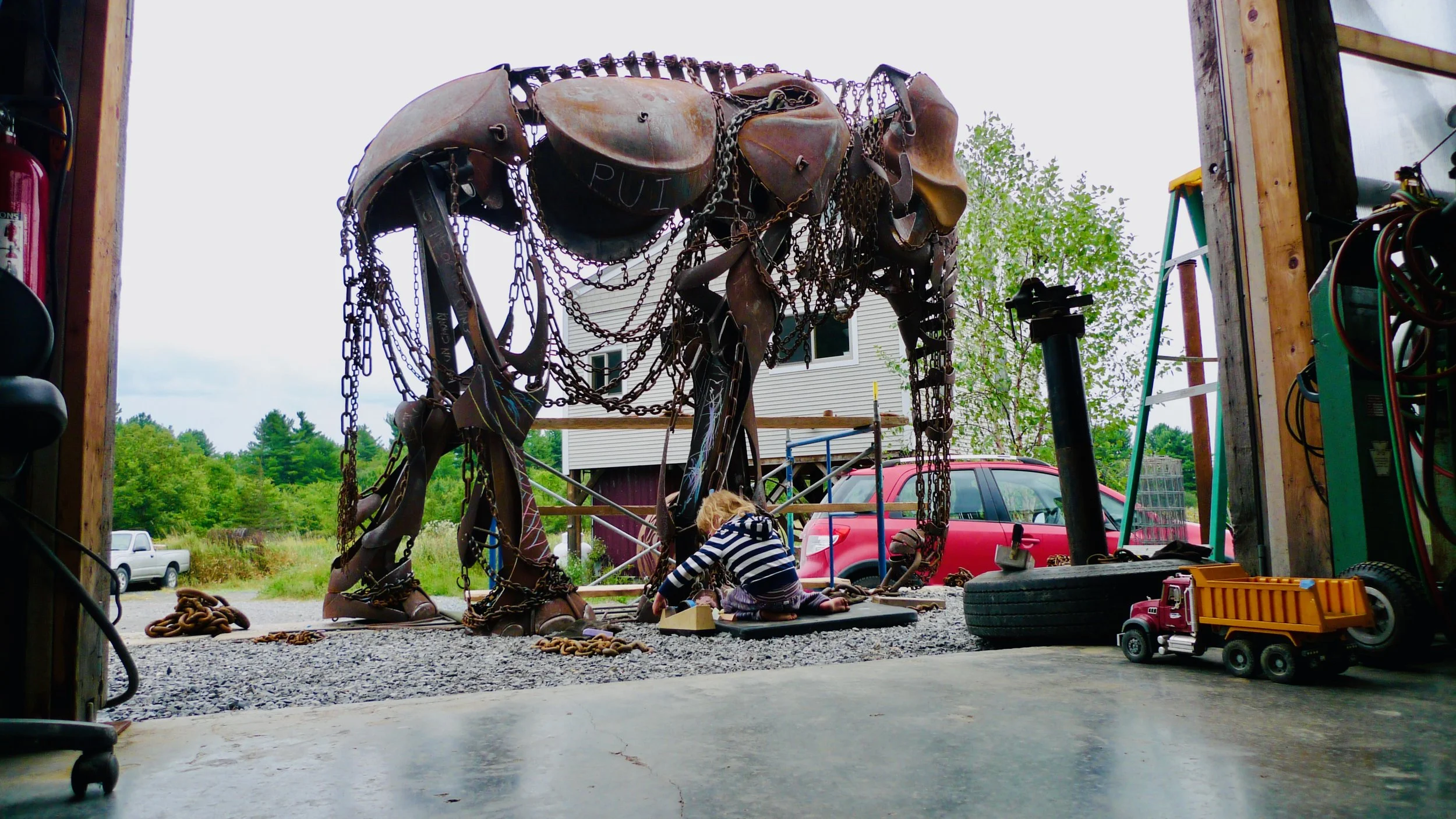
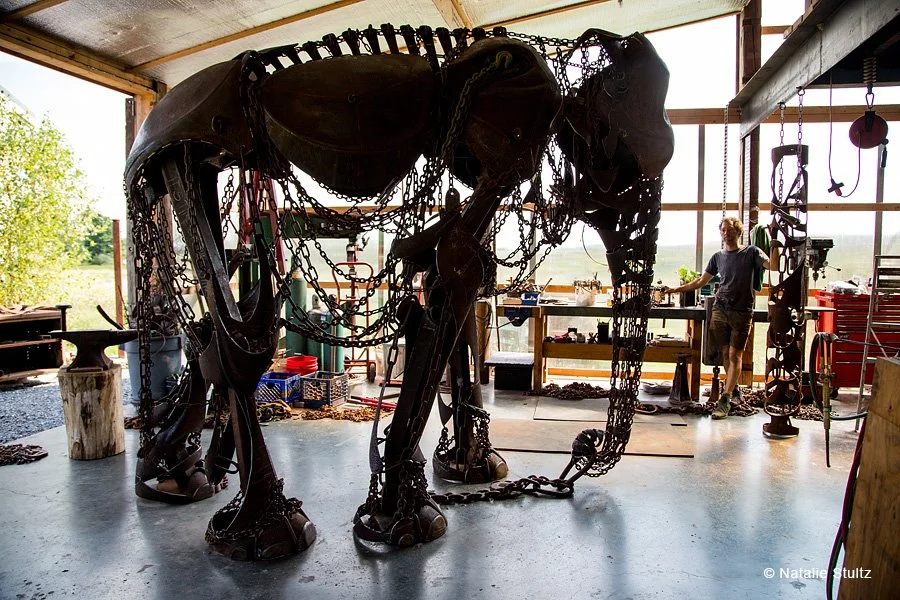
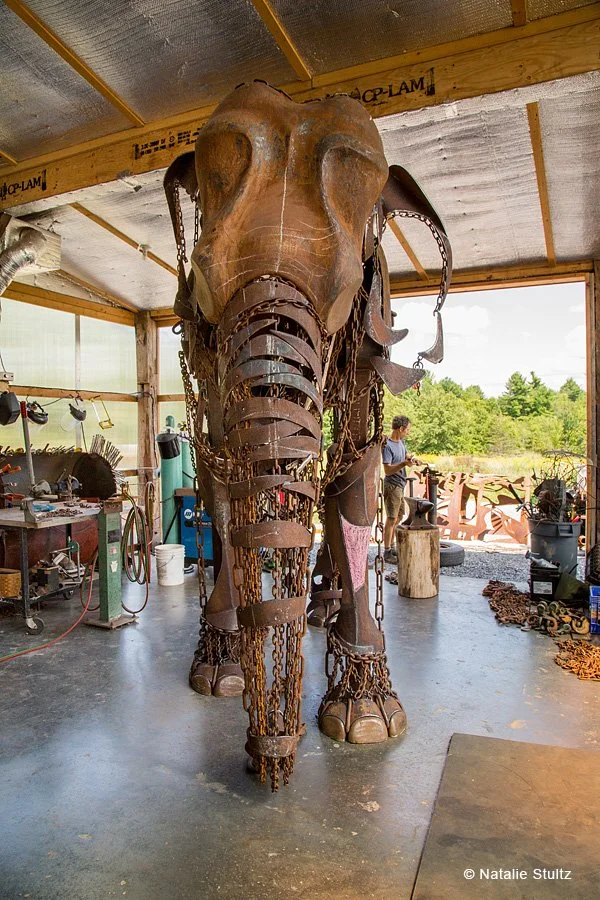
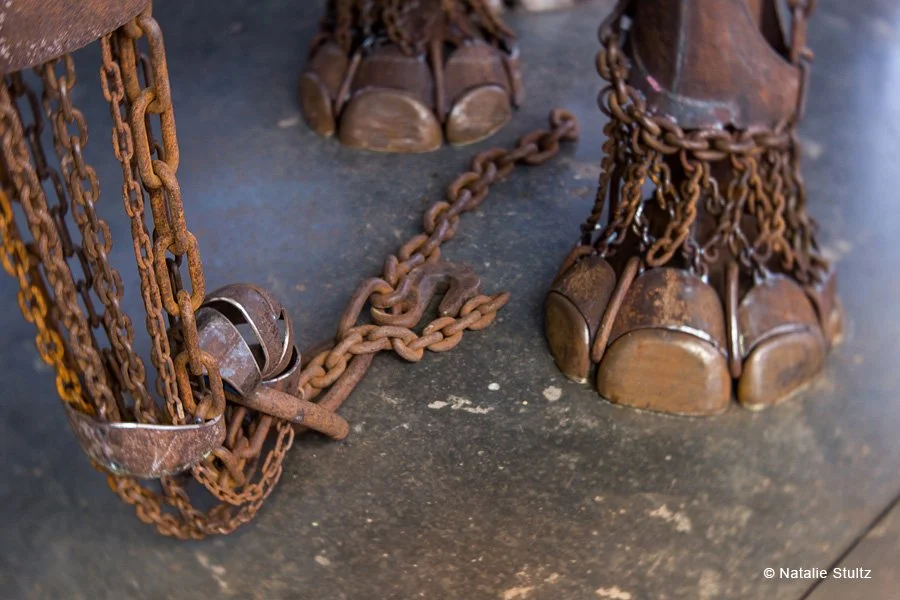
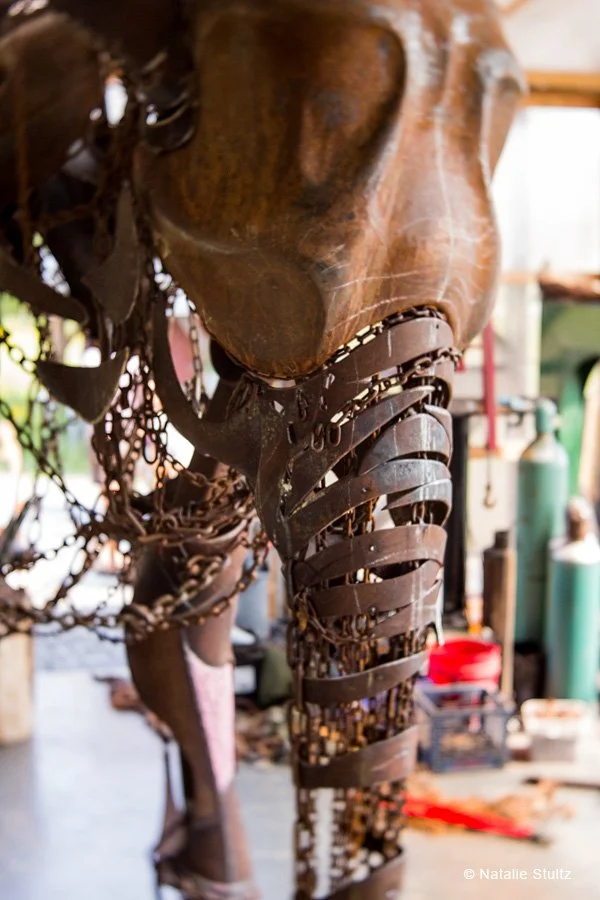
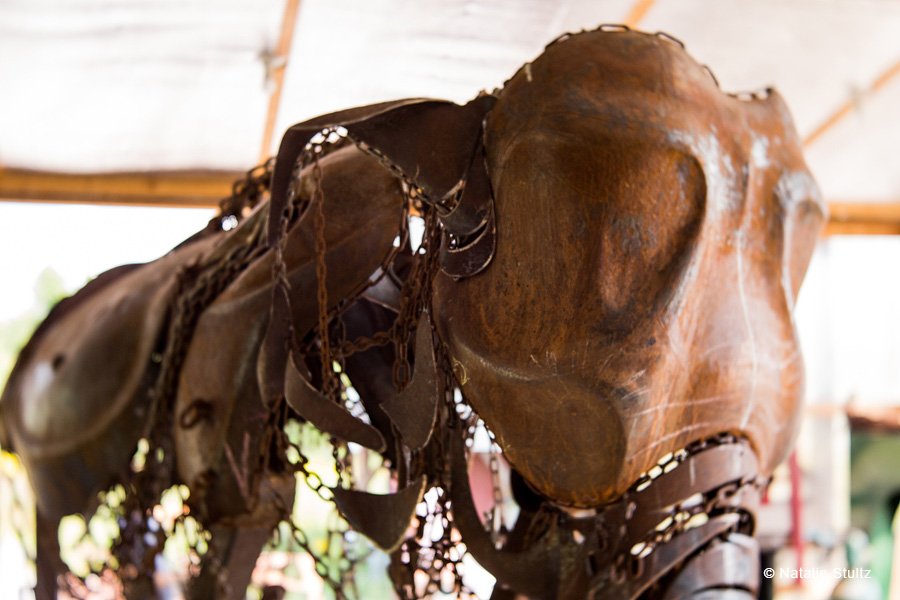
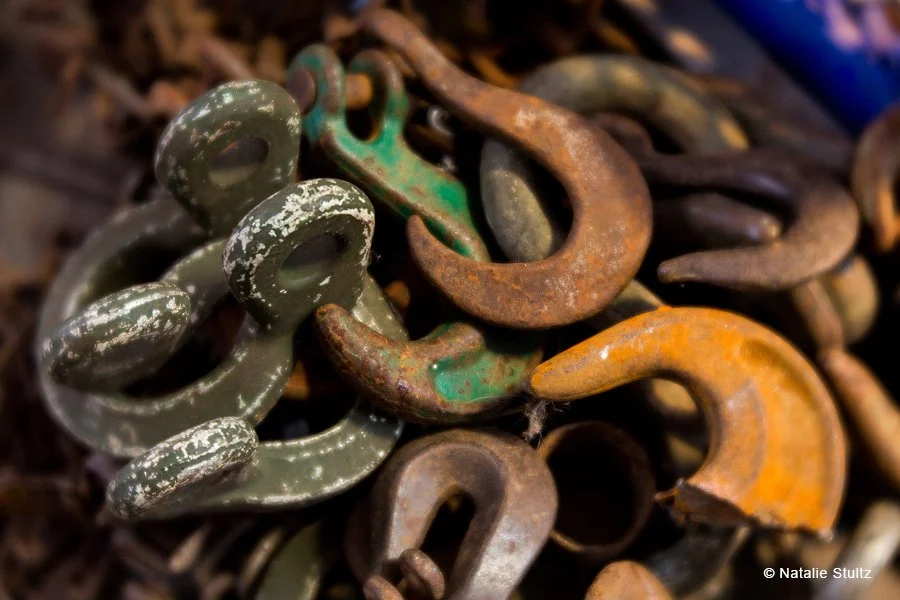
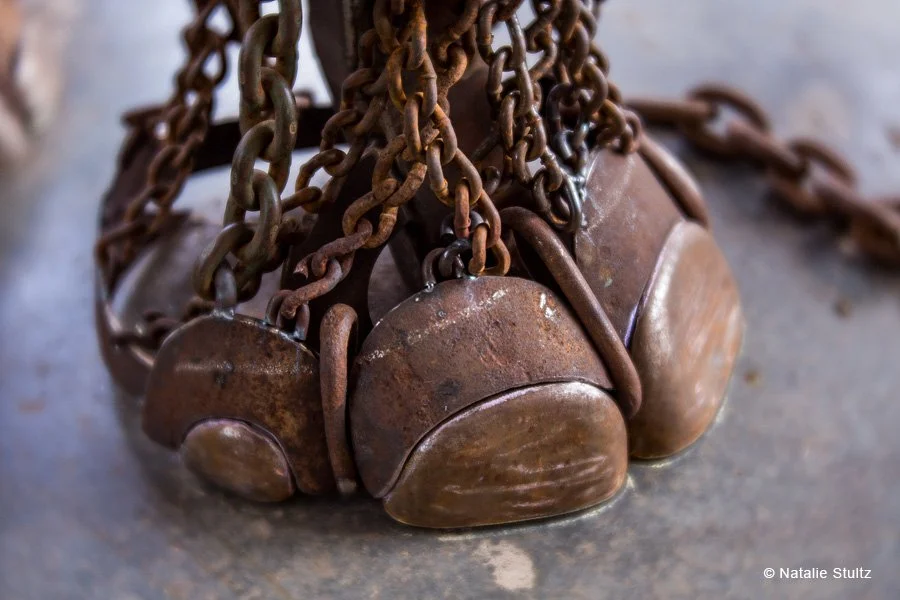
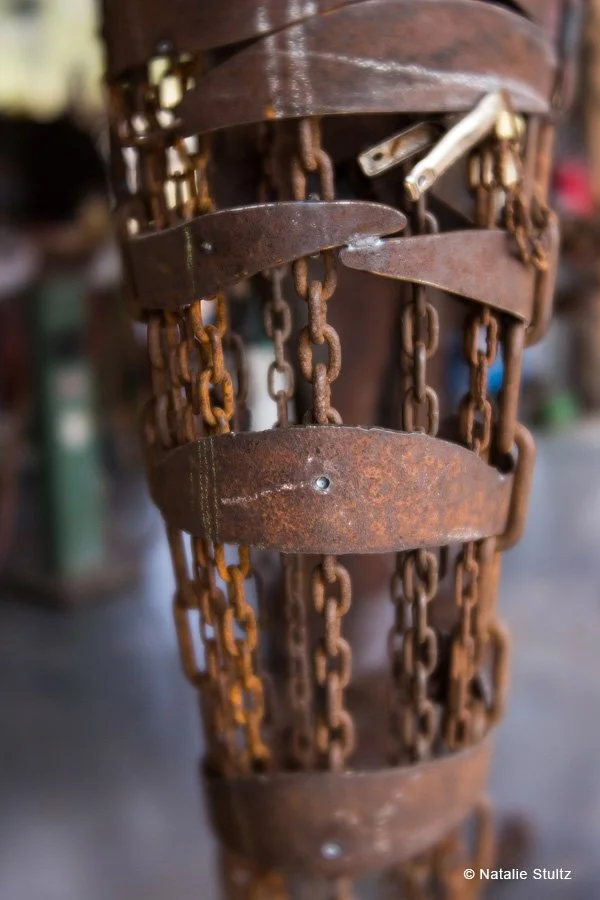
In January 2013, I began designing a prototype for an elephant. When first commissioned to build it, I imagined a large aluminum pop art piece, a life size elephant that two men could hoist up and carry on their own. But as I considered this incredible animal, and the misery that so often wraps itself around this wrinkled, emotional, brave beast, I wanted the piece to convey extreme beauty, bondage, peace, and pain all at once. Chain became the obvious material. It reads as realistic wrinkles, and it also speaks to the enslavement this giant beauty has endured living by our side.
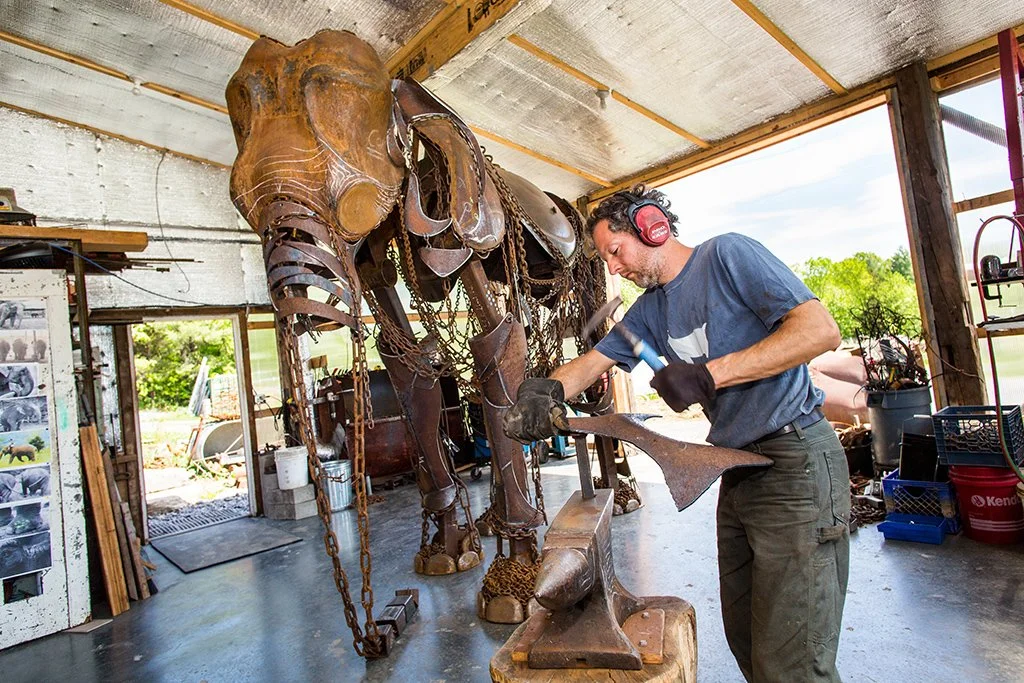
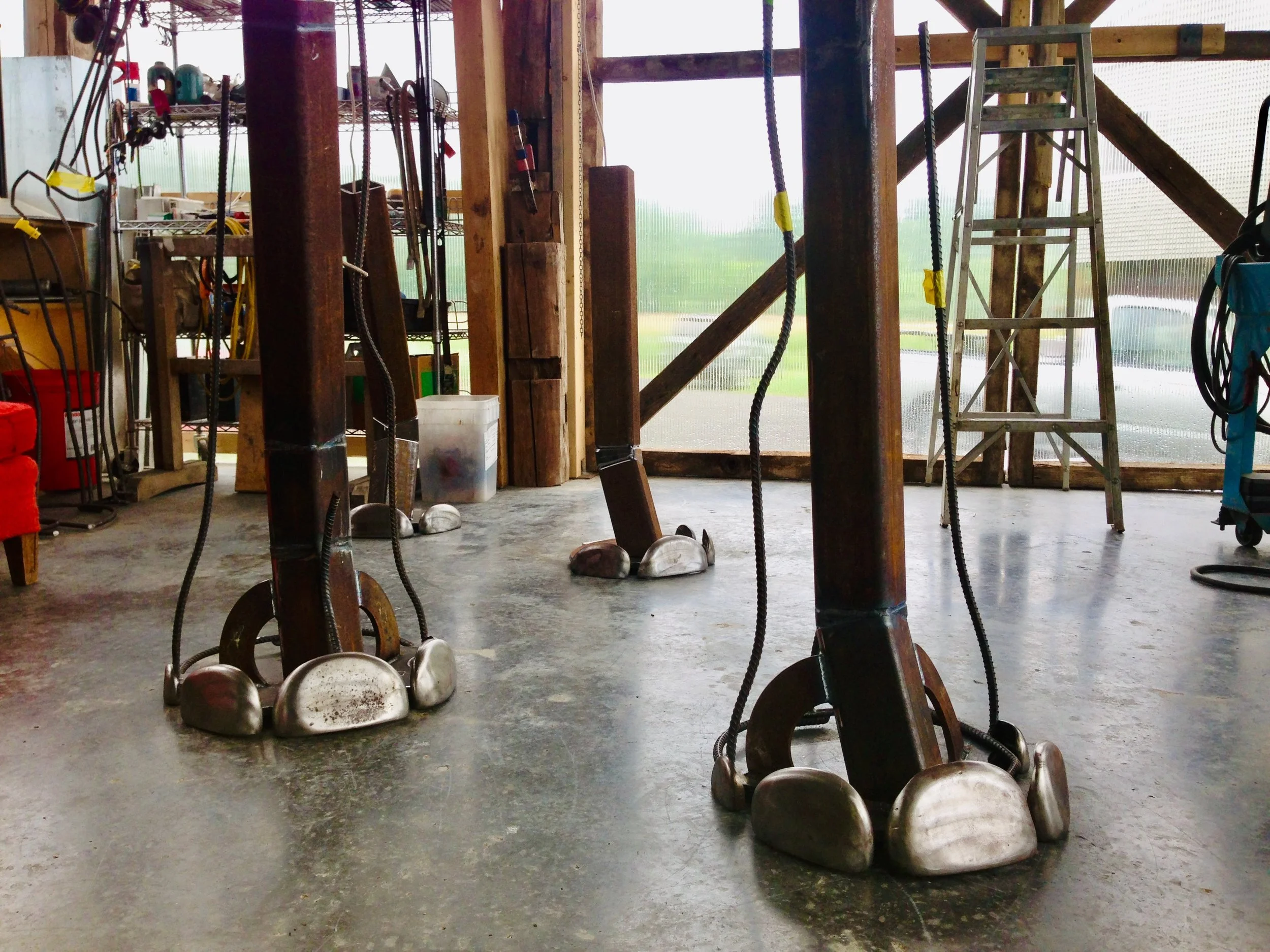
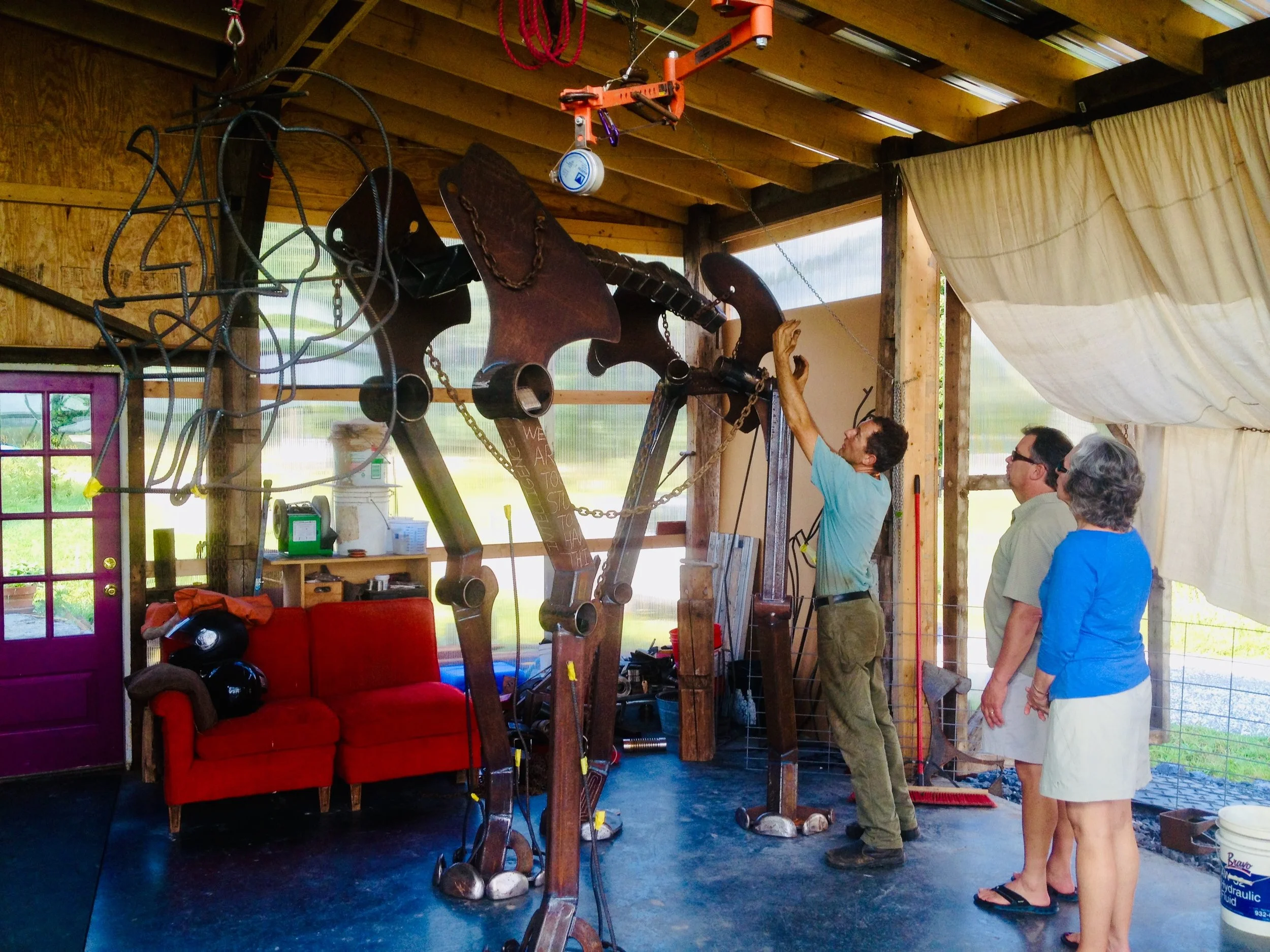
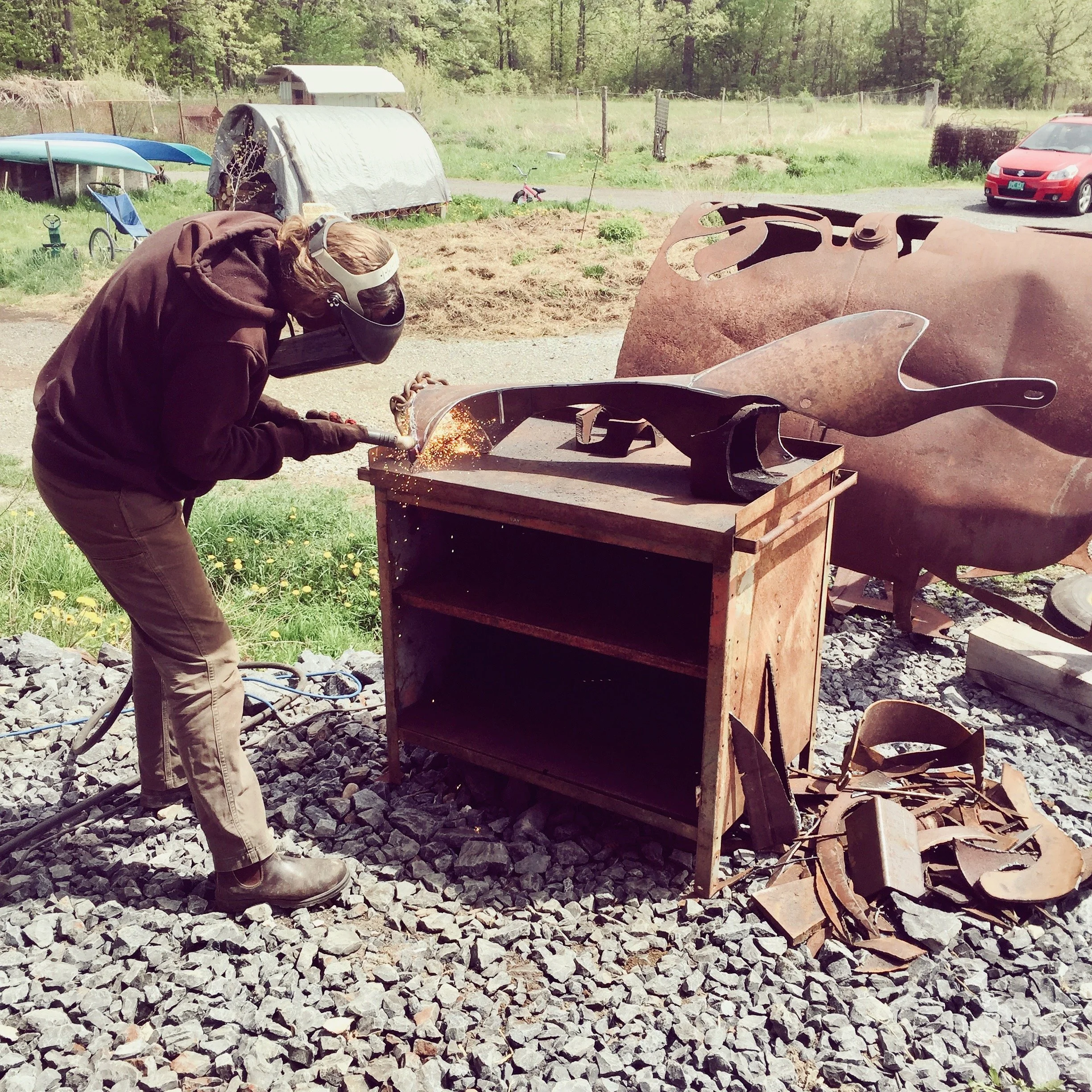
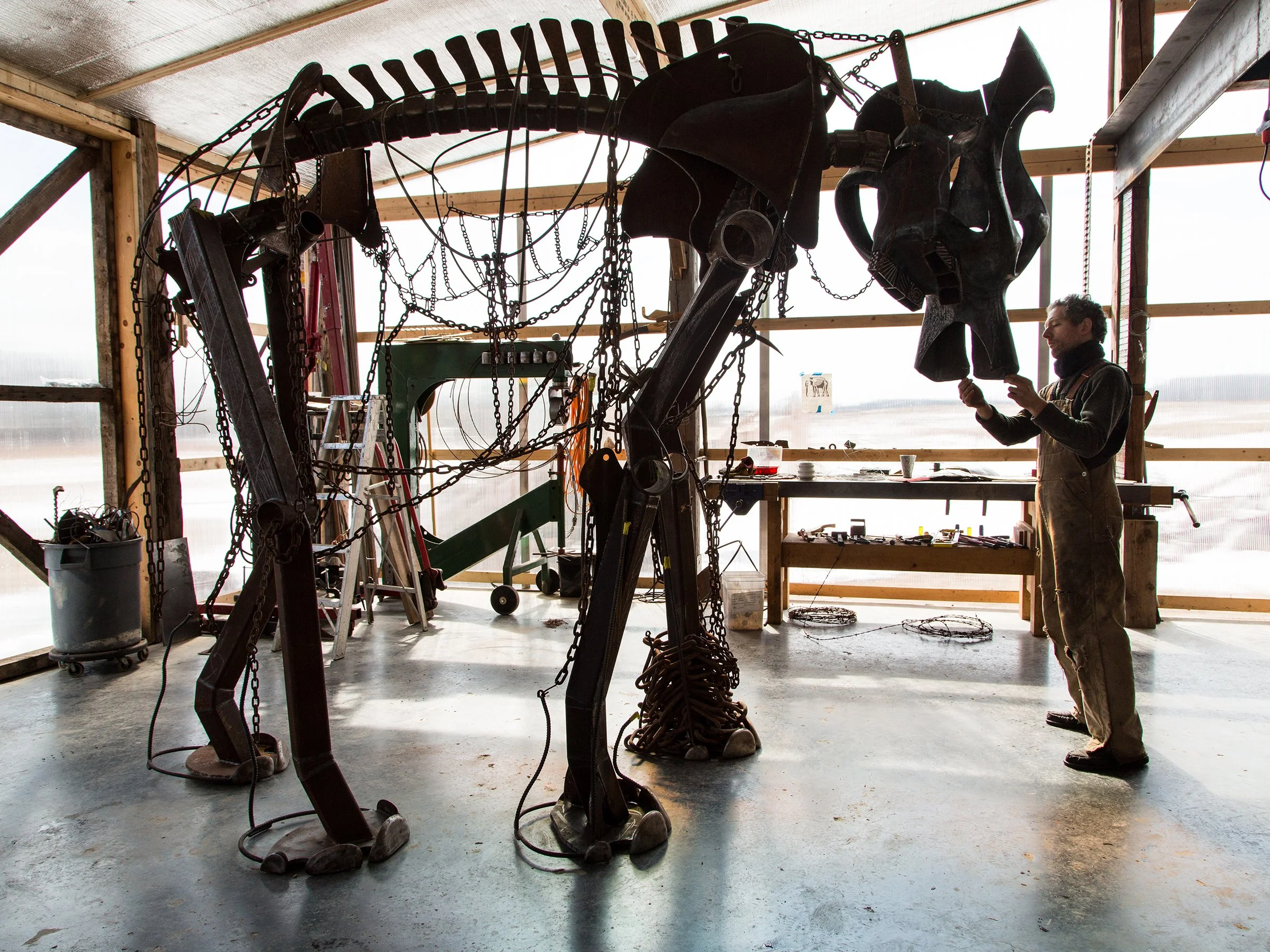
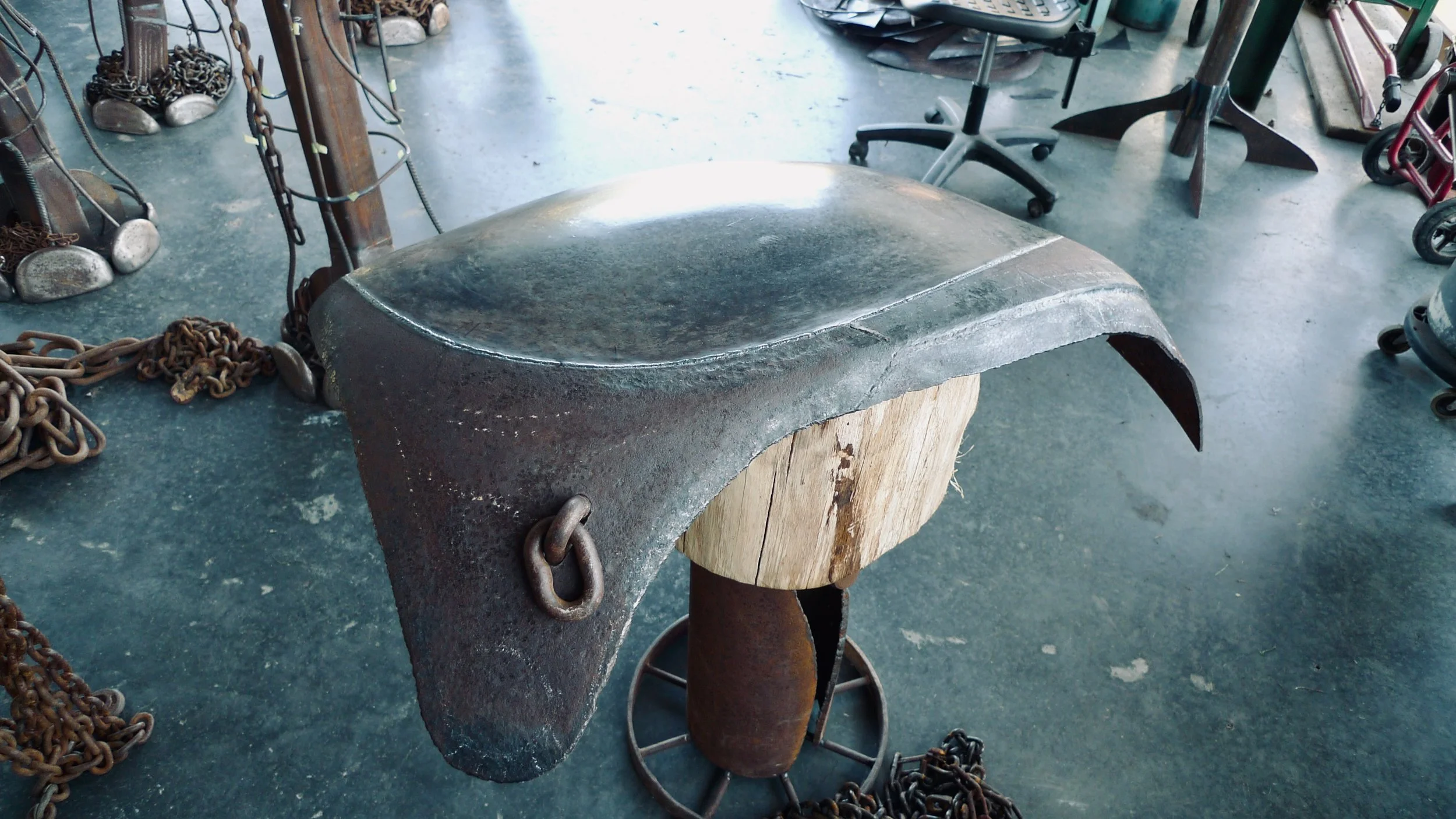
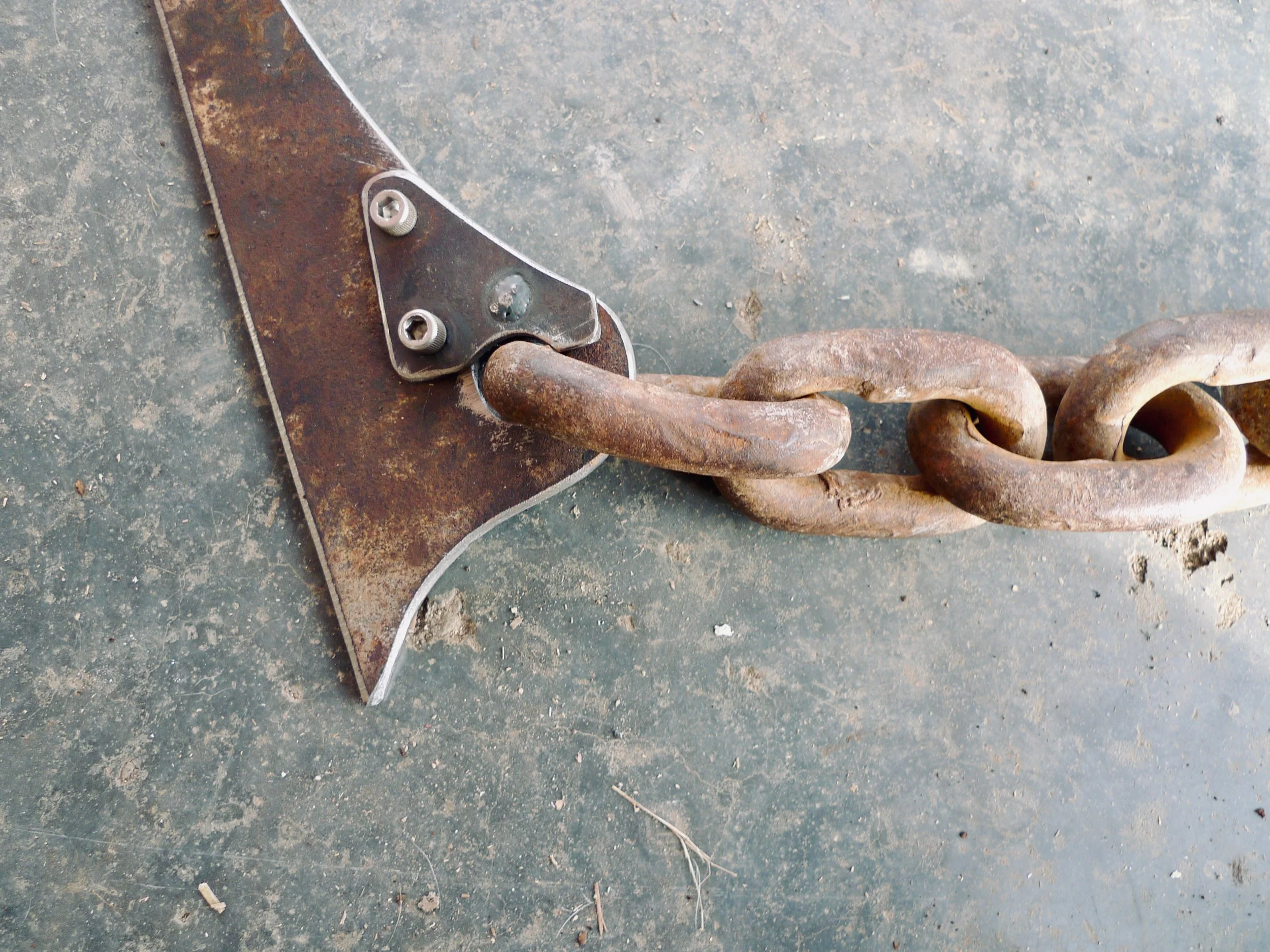
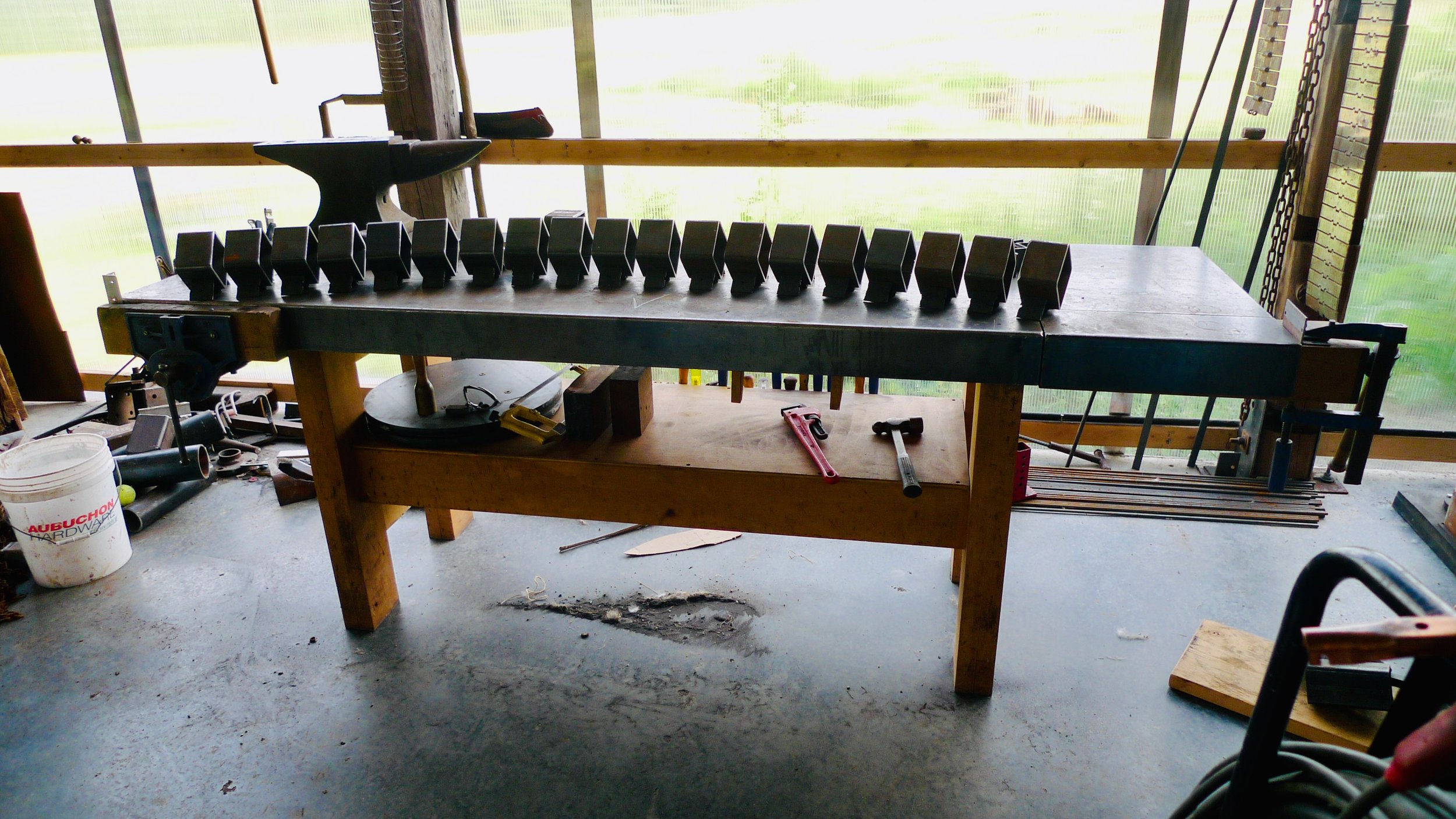
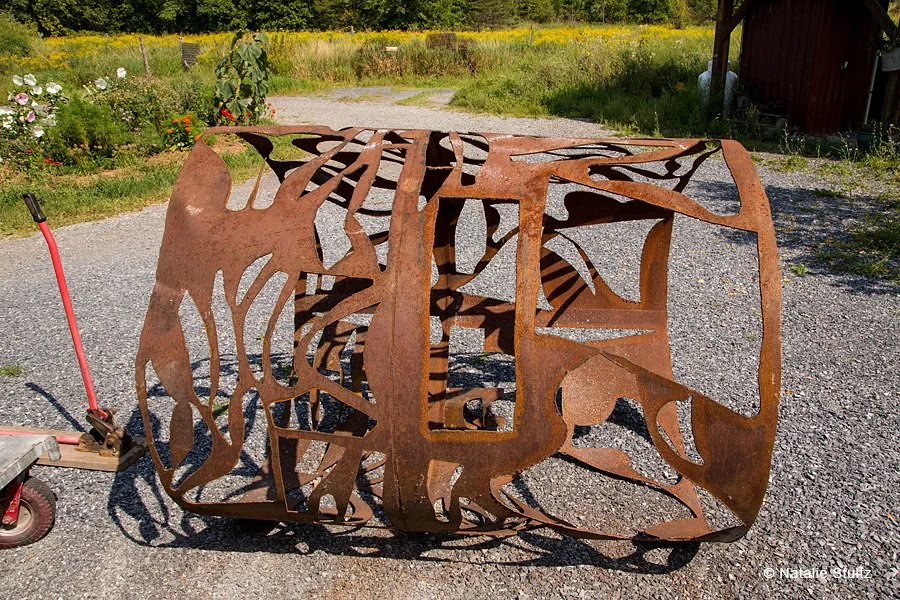
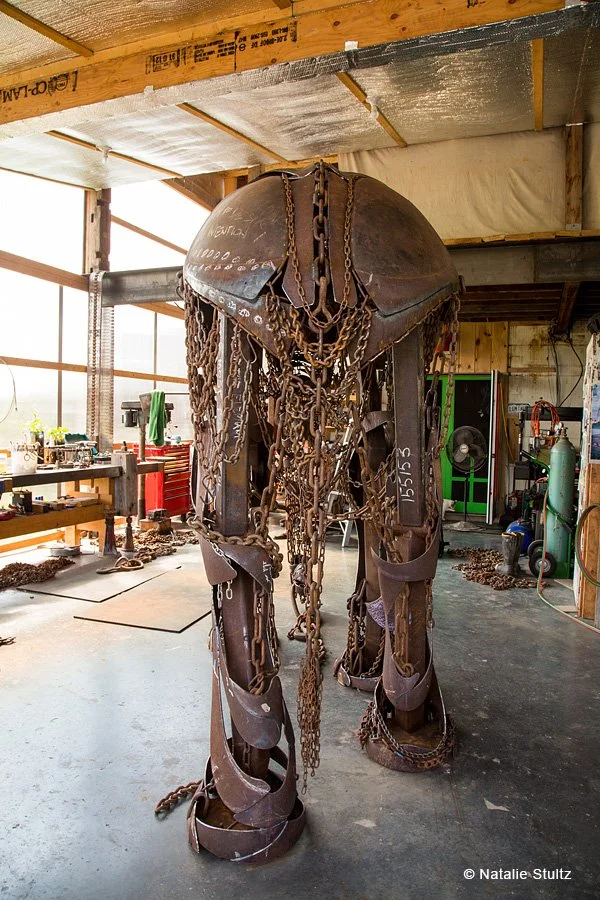
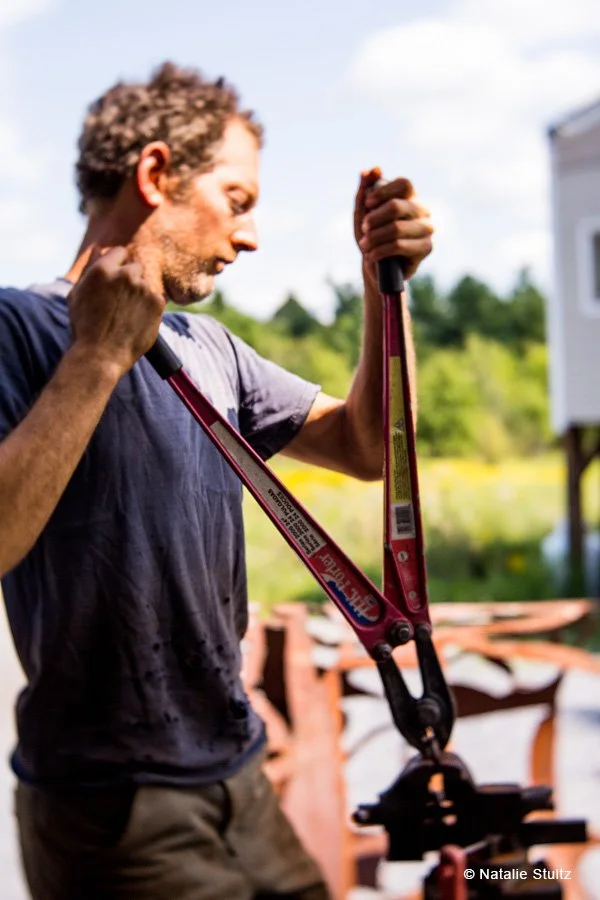
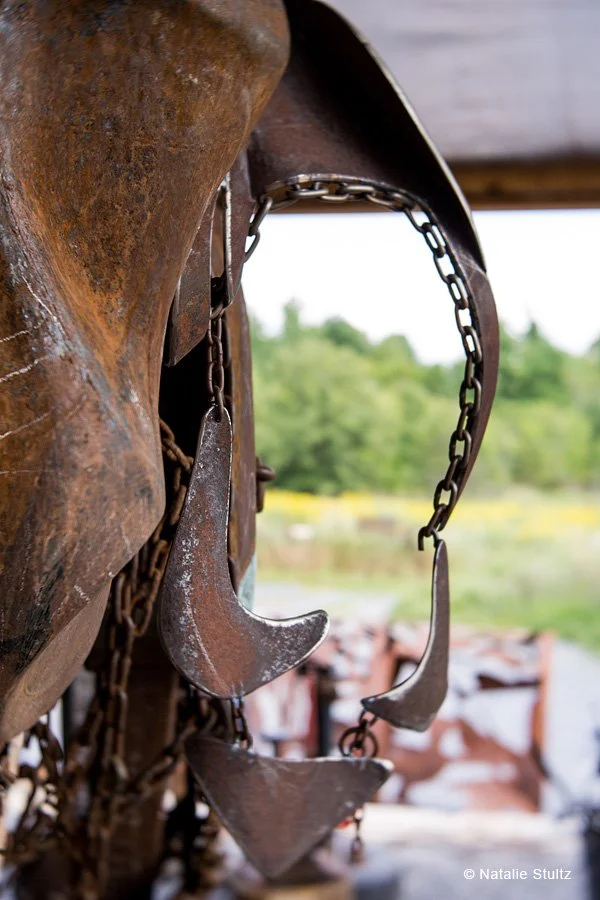
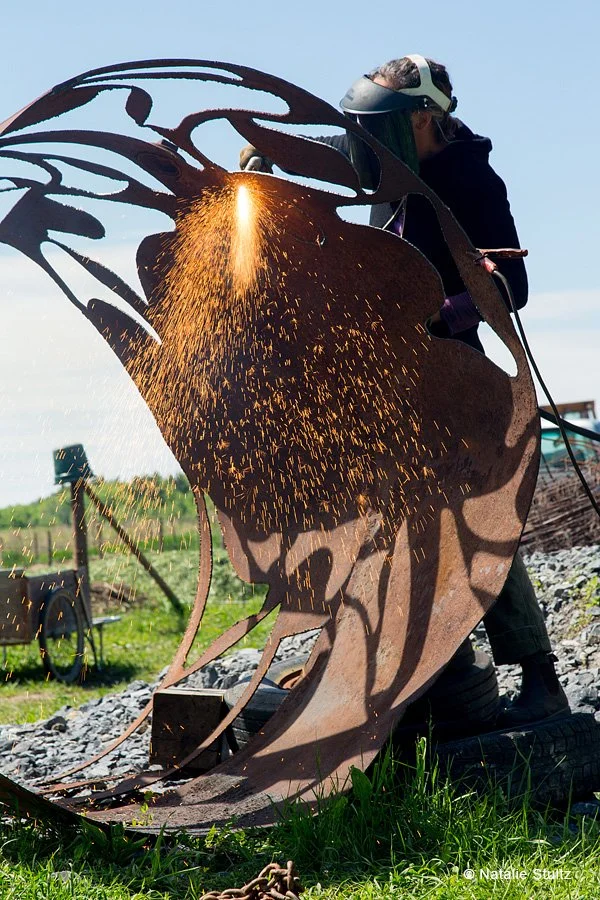
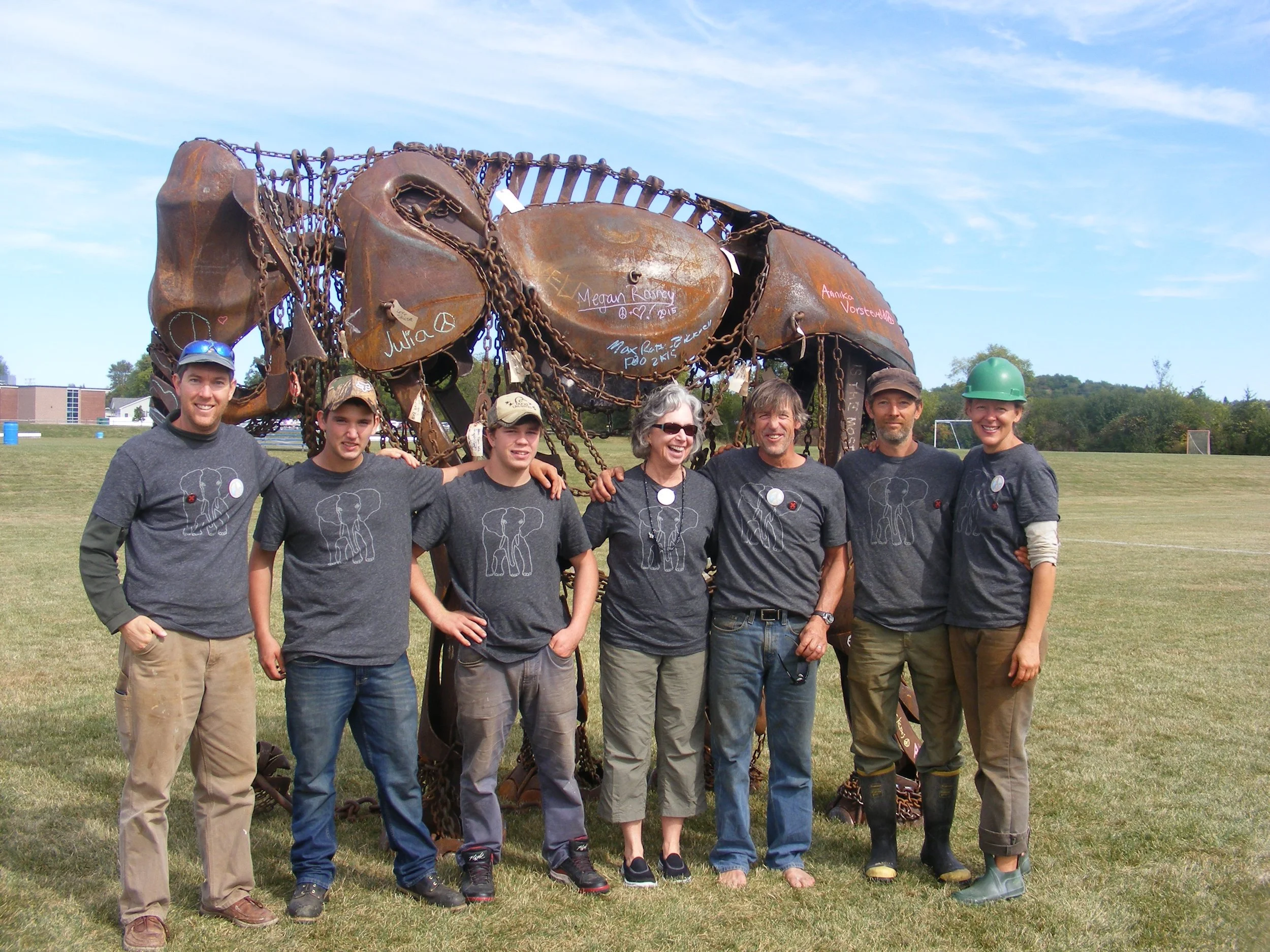
The rusted steel hide, built from assorted gauges of sheet and plate metal, gives the elephant its shape and structure, capturing skin drawn tight over the frame. I designed the skeleton from structural steel columns chosen for the load bearing capacity to give me room to expand the piece creatively. I needed a solid foundation. Then there was the question of weight: would a crane be required every time the elephant had to be moved? So I built it as a puzzle that five or six strong adults can assemble or disassemble within an hour.
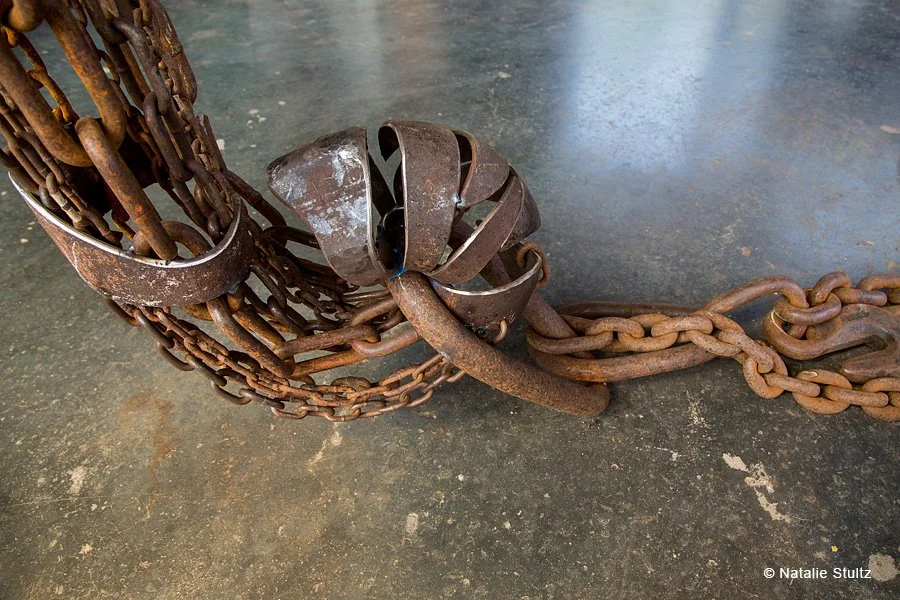
Chain also works as flexible connective tissue. The draped chain, functioning as loose skin, links the rigid skeletal components together and adds a gravitational, holistic quality that ultimately ties every part of the piece into one.
It is the mighty elephant.
Medium: fabricated steel & chain with a rust patina
Dimensions: 120 × 60 × 132 inches
SOLD

ART + ENGINEERING
"How do you move an elephant through a standard doorway? You engineer it in pieces that lock together."
THE HISTORY OF GRAVITY
Commissioned
Then shared with Burlington VT International Airport, Lake Champlain College, and the Town of Middlebury.
Gravity now resides in Charlotte, VT with its family.